

Friendship, Now With Terms and Conditions
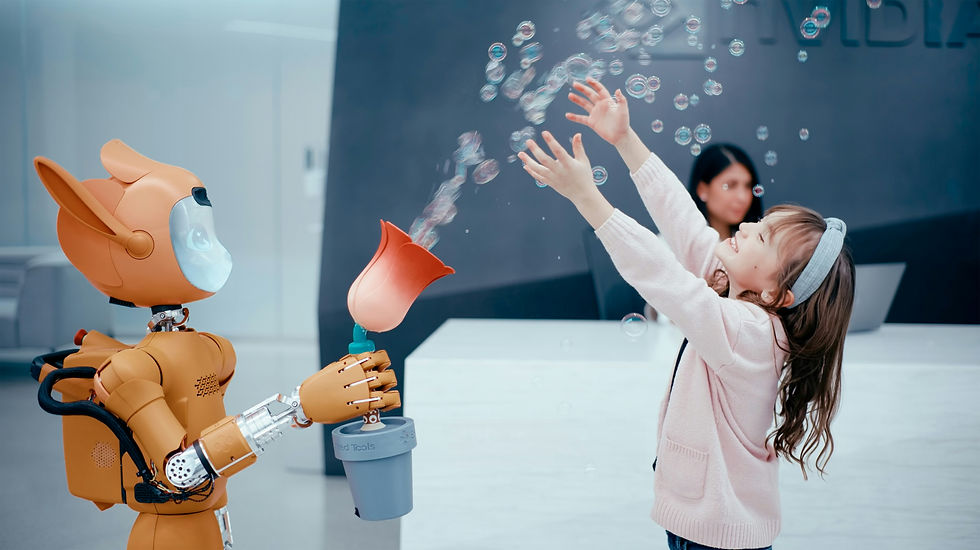
Friendship has always changed shape with technology. First it was letters, then landlines, then texting, then the strange emotional economy of sending someone a reel instead of asking how they are. So the arrival of AI companions is not some clean break from human connection. Rather, it is the next awkward extension of it.
That is what makes this whole thing unsettling. Not because it is unimaginable, but because it is completely imaginable. Of course people would talk to machines that remember things, respond instantly, never get bored, and never make the conversation about themselves. In a world where people are overworked, lonely, and permanently half-available, that is not a solid competition.
And there is already evidence that people are not merely treating these systems as toys. A study found that interacting with AI companions reduced loneliness, and in their experiments the effect was roughly comparable to talking to another person and stronger than passive activities like watching videos. Another found that users of companion chatbots described them as sources of social support in ordinary daily life, not just novelty interactions.
Loneliness is one of the central conditions of modern life. And AI companions are being built precisely for that condition. They are available all the time. They are emotionally legible. They are designed to give the feeling of attention, which, for a lot of people, is already close enough to care. A study found that feeling heard was a key mechanism behind why AI companions reduced loneliness.
What is interesting here is that the attachment makes a lot of sense. If a machine remembers your bad day, asks about your exam, mirrors your tone, and replies at 2:13 a.m. when nobody else does, then acting surprised that people feel for it is a little dishonest. We have spent years building technologies that simulate intimacy and then acting shocked when people respond emotionally to the simulation.
But this is also where the problem begins. Because a friend is one thing. A friend owned by a company is another. Replika users learned that the hard way when the company changed the behaviour of its chatbot and many users described the experience as losing a partner or friend overnight (ABC News, 2023). That episode made the stakes embarrassingly clear. These relationships may feel private and intimate, but they remain subject to moderation changes, product updates, investor pressure, and terms of service.
There is also the question of what happens when comfort becomes substitution. A mixed-methods study by Saha et al. (2026) found that heavy use of AI companions was associated with more language related to loneliness, depression, and suicidal ideation, even while some users also showed signs of emotional processing and support. Other research has similarly suggested that moderate use may help, while heavier dependence can correlate with more loneliness and less real-world socializing.
AI companions may be genuinely relieving something, while also deepening the social conditions that made them appealing in the first place. They can soothe loneliness without solving it. They can provide conversation without requiring reciprocity. They can offer presence without vulnerability. In other words, they are not replacing friendship so much as offering a version of it that has been stripped of friction.
And maybe that is exactly why they will grow.
The future of friendship probably does not look like everyone running off to marry a chatbot. It looks much duller and more realistic than that. It looks like teenagers rehearsing difficult conversations with AI before speaking to real people. It looks like isolated adults using AI for company at night. It looks like emotional habits being slowly reorganized by tools that are always there and always responsive.
The question, then, is not whether machines can imitate friendship convincingly enough. They already can, at least for some people and for some moments. The question is what it means to let private companies mediate one of the most fragile parts of human life and call it innovation.


Comments